

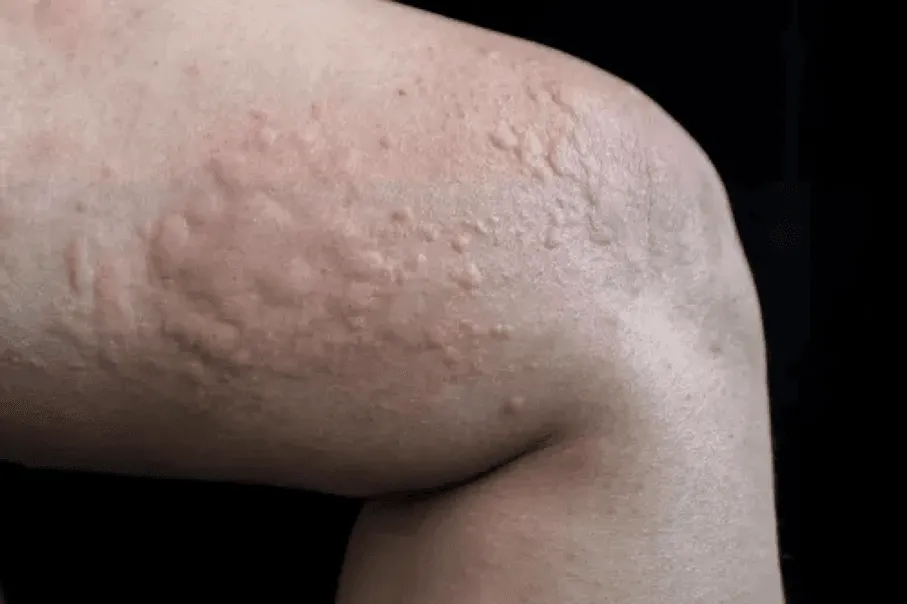
Introduction
The lesions are short-lived and disappear within 24 hours without leaving a trace. Urticaria is called acute when symptoms have been present for less than 6 weeks.
Symptoms
- Raised red or pink patches
- Intense itching
- Lesions that quickly move from one place to another
- Spontaneous clearing within a few hours
- Burning or hot sensation in the skin
- Possible associated angio-oedema (lips, eyelids, face)
Causes
- Infections (mainly viral)
- Medicines (antibiotics, anti-inflammatories)
- Foods (a frequent cause in children)
- Insect stings and bites
- Physical factors (cold, heat, exercise)
- No identifiable cause (common)
Diagnosis
- Detailed history (onset, duration, triggers)
- Skin examination
- Assessment of how long symptoms have lasted
- Checking for warning signs (breathing difficulty, feeling faint)
Treatments
- Non-sedating antihistamines (first-line treatment)
- Dose adjustment if needed
- Avoidance of identified triggers
- Short courses of corticosteroids only in certain extensive forms
- Clinical monitoring if there is associated angio-oedema
Management
Confirm the diagnosis
To rule out a cause requiring specific treatment
To avoid unnecessary treatment
To reassure the patient that the condition is benign