

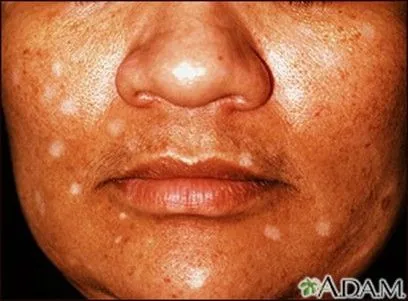
Introduction
Drug-induced pigmentation is an abnormal change in skin colour caused by taking certain medicines. It may develop gradually or after sun exposure and shows up as brownish, greyish or bluish patches. It is generally benign but can be cosmetically noticeable.
Symptoms
- Brownish, greyish or slate-blue pigmented patches
- Variable sites: face, mucous membranes, sun-exposed areas
- Diffuse or localised pigmentation
- Gradual onset after starting a treatment
- No pain or itching
- May persist after the medicine is stopped
Causes
- Build-up of the medicine or its metabolites in the skin
- Interaction between the medicine and sun exposure
- Abnormal stimulation of melanin production
- Medicines frequently involved
- antibiotics (e.g. tetracyclines) anti-inflammatory drugs antimalarials chemotherapy psychotropic drugs
- antibiotics (e.g. tetracyclines)
- anti-inflammatory drugs
- antimalarials
- chemotherapy
- psychotropic drugs
Diagnosis
- Clinical skin examination
- A detailed review of current and past treatments
- The timeline of when the lesions appeared
- Ruling out other causes of hyperpigmentation
Treatments
- Adjusting or stopping the medicine where possible
- Strict sun protection
- Suitable medical pigment lasers
- Superficial chemical peels
- Medical LED as an add-on
- Brightening dermocosmetic skin care
Management
Coordination with the prescribing doctor
An individual dermatological assessment
Clear information on how it may progress
Regular dermatological follow-up