

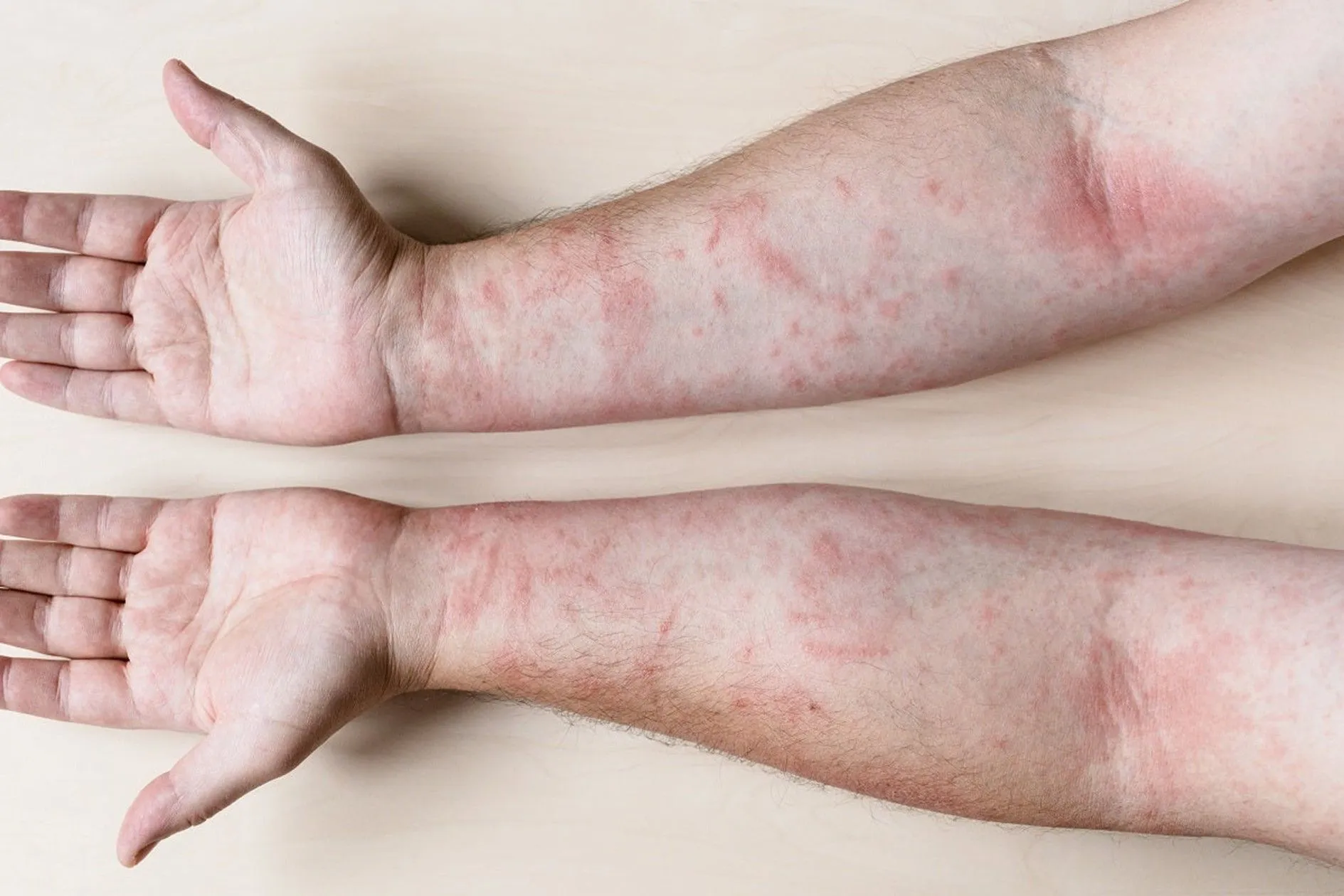
Introduction
It occurs when the skin barrier is damaged by repeated or prolonged contact with irritant substances. It is the most common form of contact dermatitis, especially on the hands.
Symptoms
- Diffuse redness
- Marked skin dryness
- Burning or tight sensation
- Cracks and fissures
- Peeling
- Pain sometimes more prominent than itching
- Common sites: hands, forearms, face
Causes
- Repeated exposure to water
- Detergents, soaps, disinfectants
- Solvents, acids, alkalis
- Household or industrial products
- Mechanical friction
- Occupational setting (healthcare, cleaning, hairdressing, industry)
Diagnosis
- Detailed history (exposures, work tasks)
- Skin examination
- Ruling out associated allergic dermatitis
- Patch tests if the diagnosis is uncertain
Treatments
- Reducing or stopping irritant exposures
- Wearing suitable gloves (with strict rules of use)
- Intensive, frequent use of emollients
- Topical corticosteroids if there is inflammation
- Adapting work practices if needed
Management
Identify the irritant factors precisely
Prevent progression to chronic dermatitis
Prevent secondary skin infection
Improve your skin’s day-to-day tolerance