

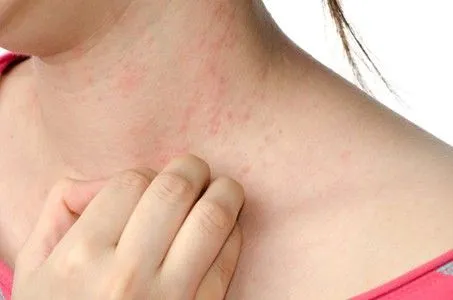
Introduction
Symptoms usually appear 24 to 72 hours after exposure, which is why the allergen responsible is not always identified straight away.
Symptoms
- Localised redness
- Severe itching
- Small blisters, sometimes oozing
- Desquamation (peeling skin)
- Thickening of the skin if it becomes chronic
Causes
- Metals
- nickel, chromium, cobalt
- Cosmetics
- fragrances, preservatives, dyes
- Topical medicines (creams, ointments)
- Occupational chemicals
- Repeated exposure
- High-risk occupation
- Atopic background
- Damaged skin barrier
Diagnosis
- A detailed medical history (history of contacts)
- Clinical skin examination
- Patch testing (epicutaneous tests), which identifies the allergen responsible precisely.
Treatments
- Strict avoidance of the identified allergen
- Appropriate topical treatment depending on severity (topical corticosteroids)
- Skin barrier repair (emollients)
- Adapting daily and work habits
Management
Precise identification of the allergen
Appropriate treatment
Clear, lasting avoidance advice
Prevention of recurrences
Regular dermatology and allergy follow-up