

Introduction
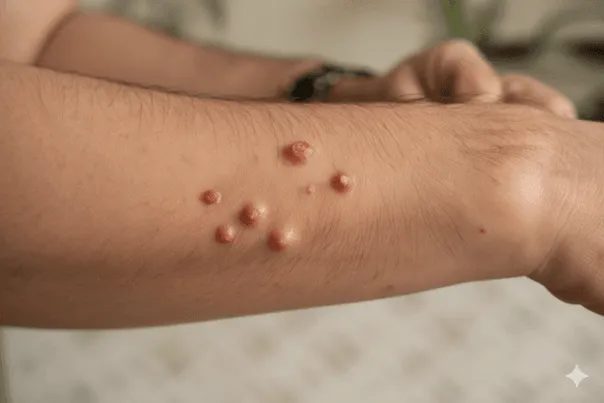
Bacterial folliculitis is a superficial infection of the hair follicle, usually caused by bacteria, mainly Staphylococcus aureus. It appears as small inflammatory spots, each centred on a hair. Usually benign, it can recur or spread if not managed appropriately.
Symptoms
- Small papules or pustules centred on a hair
- Localised redness around the follicle
- Burning or stinging sensation
- Variable itching
- Single or multiple lesions
- Common sites: beard, scalp, thighs, buttocks
- No general symptoms in simple forms
- May progress to a boil if it gets worse
Causes
- Bacterial infection, usually with Staphylococcus aureus
- Contributing factors
- shaving or hair removal repeated friction excessive sweating moist, macerated skin tight clothing
- shaving or hair removal
- repeated friction
- excessive sweating
- moist, macerated skin
- tight clothing
- Predisposing conditions
- diabetes weakened immune system
- diabetes
- weakened immune system
Diagnosis
- Clinical diagnosis in most cases
- No further tests needed in simple forms
- Bacterial swab in the case of: recurrent forms treatment failure higher-risk patients
- recurrent forms
- treatment failure
- higher-risk patients
- Differential diagnosis with: acne pseudofolliculitis fungal folliculitis
- acne
- pseudofolliculitis
- fungal folliculitis
Treatments
- Skin antiseptics
- Topical antibiotics (limited forms)
- Oral antibiotics for widespread or deep forms
- Temporarily stopping shaving
- Appropriate skin hygiene
- Avoiding friction and moisture build-up
- No specific device-based treatment
- Standard dermatological care
Management
Dermatological care for recurrent cases
Identifying and correcting contributing factors
Patient education on hygiene measures
Follow-up if deeper forms develop