

Introduction
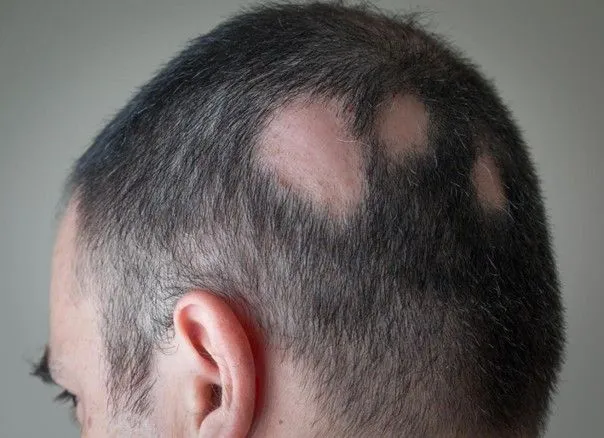
Alopecia areata is an autoimmune disease characterised by sudden, localised hair loss, most often in round patches. It can affect the scalp, beard, eyebrows, eyelashes and sometimes all body hair. Its course is unpredictable, alternating between phases of hair loss and regrowth.
Symptoms
- Sudden appearance of one or more well-defined bald patches
- Scalp skin looks normal and smooth, without scaling
- ‘Exclamation mark’ hairs at the edges of the patches
- May affect: the scalp the beard the eyebrows / eyelashes body hair
- the scalp
- the beard
- the eyebrows / eyelashes
- body hair
- Possible associated nail changes (ridges, pitting)
- No pain; sometimes itching or tingling before the hair falls out
Causes
- Autoimmune mechanism targeting the hair follicle
- Genetic predisposition
- Common triggers
- Psychological or emotional stress Infections Injuries
- Psychological or emotional stress
- Infections
- Injuries
- Possible association with other autoimmune diseases
- Thyroid disorders Vitiligo Atopic dermatitis
- Thyroid disorders
- Vitiligo
- Atopic eczema (atopic dermatitis)
Diagnosis
- The diagnosis is essentially clinical, supported by:
- Specialist dermatological examination
- Trichoscopy (yellow dots, black dots, dystrophic hairs)
- Baseline photographs for follow-up
- Targeted blood tests if the context suggests it
- Ruling out scarring or infectious alopecia
Treatments
- Local corticosteroid therapy (topical or intralesional)
- Selected topical immunomodulators
- Systemic treatments for extensive or severe forms
- Psychological support if the impact is significant
- Medical LED therapy (anti-inflammatory and stimulating action)
- Scalp microneedling
- Hair PRP as an adjunctive treatment
- Personalised combined protocols
- calm the immune reaction
- encourage regrowth
Management
Specialist dermatology consultation
Accurate assessment of the extent and activity of the disease
Individual choice of treatment
Regular follow-up to adjust the strategy
Clear information on the course and outlook