

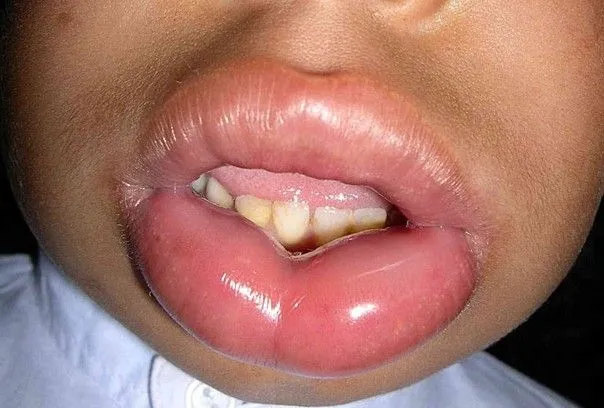
Introduction
It is caused by an allergic mechanism, most often mediated by histamine, and may occur on its own or together with urticaria. Swelling in certain areas (tongue, throat) can be life-threatening and requires urgent treatment.
Symptoms
- Sudden swelling of the lips, eyelids, cheeks
- Swelling of the tongue or throat
- Feeling of tightness or local pain
- Often no redness of the skin
- Itching possible but not always present
- Difficulty breathing or swallowing (severe forms)
Causes
- Food allergies
- Drug allergies
- Insect stings and bites
- Latex
- Contrast agents
- Certain environmental allergens
Diagnosis
- Detailed history (timing, trigger)
- Targeted clinical examination
- Checking for signs of serious breathing problems
- Distinguishing it from non-allergic angio-oedema
- Allergy work-up at a later date, after the acute phase
Treatments
- Antihistamines as first-line treatment
- Systemic corticosteroids if necessary
- Adrenaline in severe or life-threatening cases
- Medical monitoring
- Hospital admission if breathing is affected
- medical emergency
Management
Identify precisely which allergen is responsible
Prevent recurrences
Assess the risk of severe reactions
Prescribe suitable emergency treatment if necessary