

Introduction
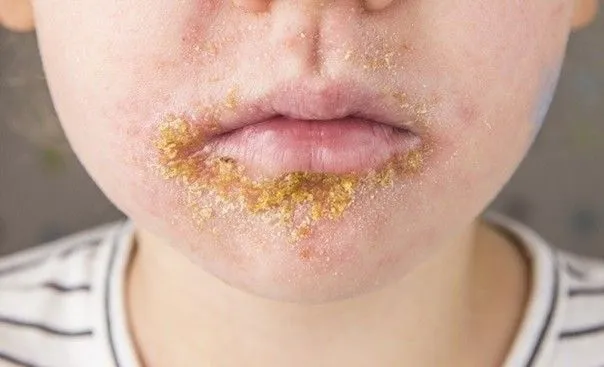
Impetigo is a superficial bacterial skin infection that is highly contagious. It mainly affects children but can also occur in adults. It is most often caused by Staphylococcus aureus and/or streptococci. With appropriate treatment it is usually benign, but early treatment is essential to limit spread and complications.
Symptoms
- Superficial red patches
- Blisters that burst quickly
- Characteristic yellowish, ‘honey-coloured’ crusts
- Common sites: face (nose, mouth), scalp, limbs
- Possible itching
- Rapid spread of lesions through self-inoculation
- No pain in most cases
- Fever rare, mainly in extensive forms
Causes
- Infection with
- Staphylococcus aureus beta-haemolytic streptococcus
- Staphylococcus aureus
- beta-haemolytic streptococcus
- Entry point through the skin
- scratch marks insect bites pre-existing eczema
- scratch marks
- insect bites
- pre-existing eczema
- Transmission
- direct skin-to-skin contact contaminated objects (towels, toys)
- direct skin-to-skin contact
- contaminated objects (towels, toys)
- Encouraged by heat and humidity
Diagnosis
- Diagnosis is essentially clinical
- No additional tests needed in typical forms
- Bacterial swab in the event of: recurrent forms treatment failure suspected resistance
- recurrent forms
- treatment failure
- suspected resistance
- Differential diagnosis with: herpes contact dermatitis infected eczema
- herpes
- contact dermatitis
- infected eczema
Treatments
- Mild antiseptics
- Topical antibiotics (limited forms)
- Oral antibiotics in the event of
- extensive forms multiple lesions outbreaks in the family or at school
- extensive forms
- multiple lesions
- outbreaks in the family or at school
- Gentle, regular cleaning of the lesions
- Short nails to limit scratching
- Temporary absence from school if needed
- No instrument-based dermatological technology
- Standardised medical care
Management
Dermatological or paediatric care
Information for parents and those around the child
Strict hygiene measures to limit spread
Follow-up until the lesions have cleared completely