

Introduction
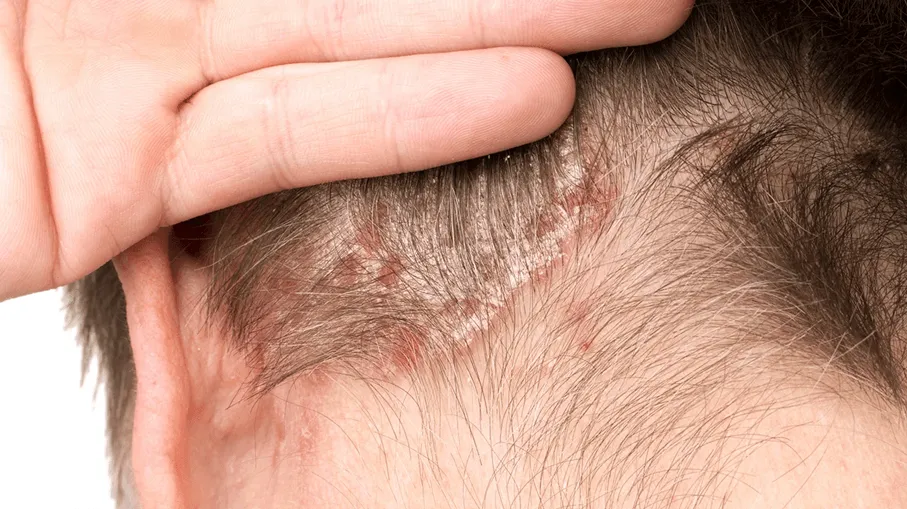
Scalp infections include fungal, bacterial and parasitic conditions that can cause itching, inflammatory lesions, scaling, crusting and hair loss. They require an accurate diagnosis, as treatment differs completely depending on the organism responsible. Early treatment helps prevent complications and lasting damage to the hair.
Symptoms
- Itching, sometimes intense
- Localised or widespread redness and inflammation
- Thick scales, crusts, oozing
- Painful pustules or follicular lesions
- Bald patches, sometimes inflamed
- Localised or diffuse hair loss
- Fever or swollen lymph nodes in some severe forms
Causes
- Scalp ringworm (tinea capitis)
- Yeasts (specific inflammatory forms)
- Bacterial folliculitis
- Impetigo of the scalp
- Secondary infection of pre-existing skin conditions
- Pediculosis (head lice)
- Scabies (less common on the scalp in adults)
Diagnosis
- Diagnosis is based on: Specialist dermatological examination Careful clinical assessment of the lesions Mycological tests (fungal samples) Bacterial swabs if needed Targeted dermoscopy Ruling out other diagnoses: psoriasis seborrhoeic dermatitis non-infectious inflammatory alopecia
- Specialist dermatological examination
- Careful clinical assessment of the lesions
- Mycological tests (fungal samples)
- Bacterial swabs if needed
- Targeted dermoscopy
- Ruling out other diagnoses: psoriasis seborrhoeic dermatitis non-infectious inflammatory alopecia
- psoriasis
- seborrhoeic dermatitis
- non-infectious inflammatory alopecia
Treatments
- Topical or oral antifungals
- Topical or oral antibiotics depending on severity
- Specific antiparasitic treatments
- Local antiseptic care
- Treatment of close contacts if needed
- Thorough scalp hygiene
- Avoiding contaminated items
- Disinfecting fabrics and accessories
- Preventing recurrences
- Medical LED (anti-inflammatory and healing effect as an add-on)
- Supervised dermatological scalp care
- Supportive protocols after the infection has cleared
- treatment strictly based on the cause
Management
Specialist dermatology consultation
Rapid identification of the infectious agent
Targeted treatment
Follow-up until complete recovery
Prevention of recurrences and complications