

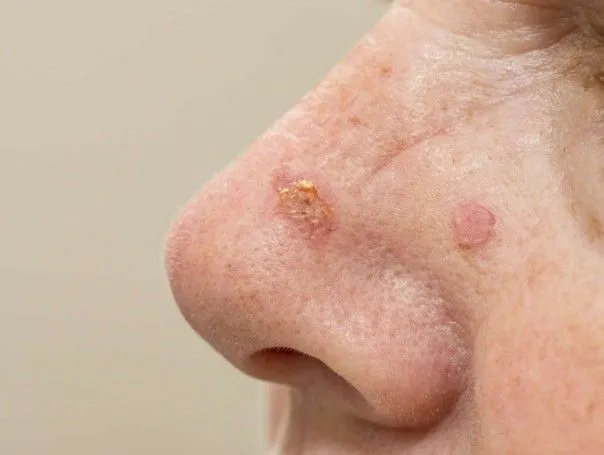
Introduction
They are very common in fair-skinned adults and should always be assessed by a dermatologist.
Symptoms
- Patches of skin that feel rough, sometimes easier to feel than to see
- Pink, red or skin-coloured lesions
- Fine scales or superficial crusts
- Skin that feels dry, irritated or sensitive
- Mainly found on sun-exposed areas: face balding scalp ears backs of the hands forearms
- face
- balding scalp
- ears
- backs of the hands
- forearms
- Sometimes itching, burning or superficial bleeding
Causes
- Chronic or occupational sun exposure
- Repeated sunburn
- Fair skin types (phototypes)
- Skin ageing
- Male sex (more common)
- Weakened immune system
- History of skin cancer
Diagnosis
- Full skin examination
- Dermoscopy of the lesions
- Assessment of their number and extent
- Skin biopsy if there is diagnostic doubt or signs of transformation
- Rapid thickening
- Spontaneous bleeding
- Ulceration
- Persistent pain
Treatments
- Topical treatments specific to actinic keratoses
- Field treatment protocols
- Close monitoring of at-risk areas
- Targeted cryotherapy
- Surgical excision if transformation is suspected
- Appropriate medical destructive techniques
- Photodynamic therapy (PDT)
- Selected dermatological lasers
- Medical LED therapy as an anti-inflammatory add-on
- Personalised combined protocols
- remove visible lesions
- treat the sun-damaged skin field
Management
Specialist dermatology consultation
Assessment of skin cancer risk
Individual choice of treatment
Treatment of visible lesions and of the field of cancerisation
Regular long-term follow-up