

Introduction
An accurate diagnosis is essential to avoid unjustified avoidance, which can limit future treatment options.
Symptoms
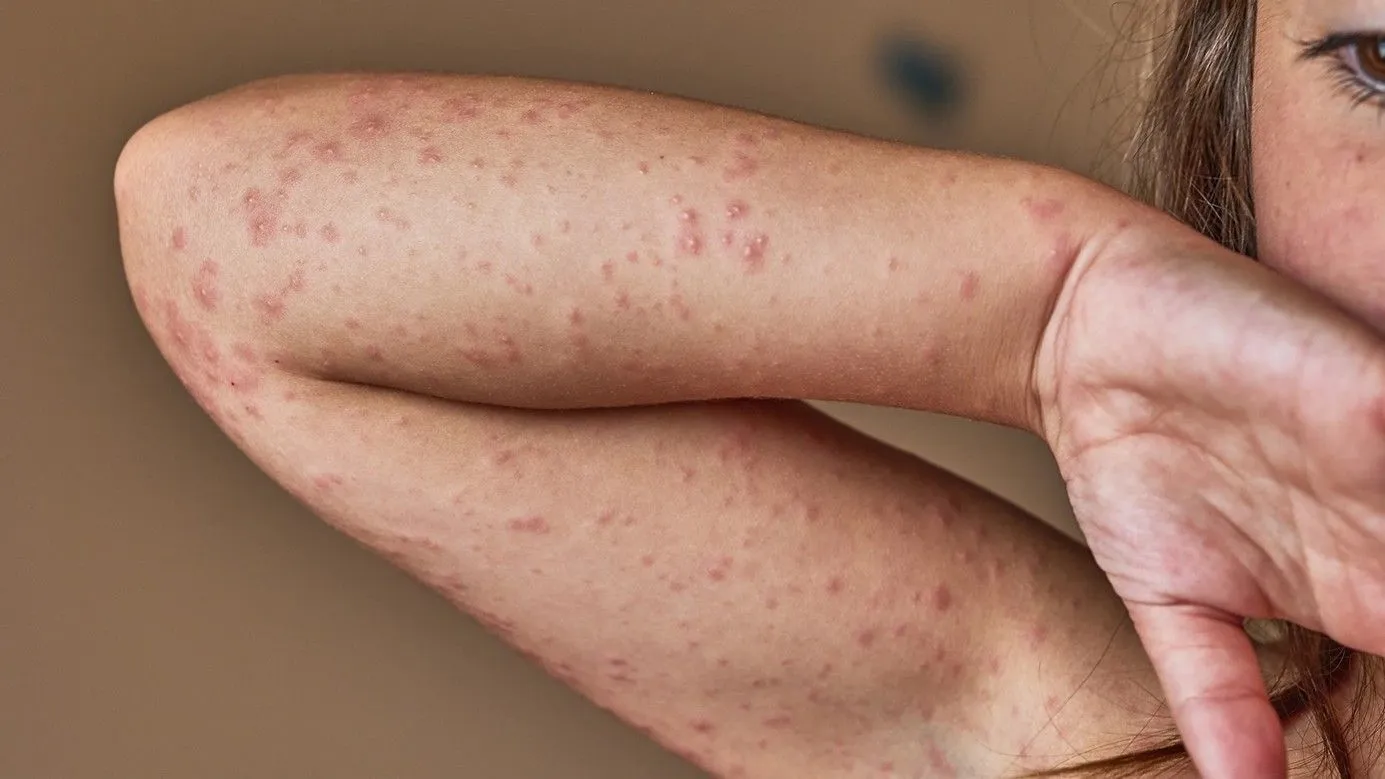
- Maculopapular skin rash
- Acute urticaria
- Widespread itching
- Angio-oedema (lips, eyelids, face)
- Fever accompanying a rash
- Mucosal involvement (severe forms)
- Rarely: anaphylactic reaction
Causes
- Immediate (IgE-mediated)
- Delayed (cell-mediated immunity)
- Beta-lactams (penicillins, cephalosporins)
- Sulphonamides
- Macrolides
- Quinolones
- Glycopeptides
Diagnosis
- Detailed history (drug, timing, symptoms)
- Reconstruction of your treatment history
- Skin examination
- Allergy tests carried out some time after the reaction: Specific skin tests Drug patch tests Controlled oral challenge tests (if indicated)
- Specific skin tests
- Drug patch tests
- Controlled oral challenge tests (if indicated)
Treatments
- Immediate discontinuation of the suspected antibiotic
- Antihistamines for skin symptoms
- Topical or systemic corticosteroids depending on severity
- Adrenaline auto-injector for severe reactions
- Identification of safe alternative antibiotics
Management
Confirm or rule out a true allergy
Avoid an unwarranted ‘penicillin allergy’ label
Make future prescriptions safe
Optimise treatment choices, including in hospital