

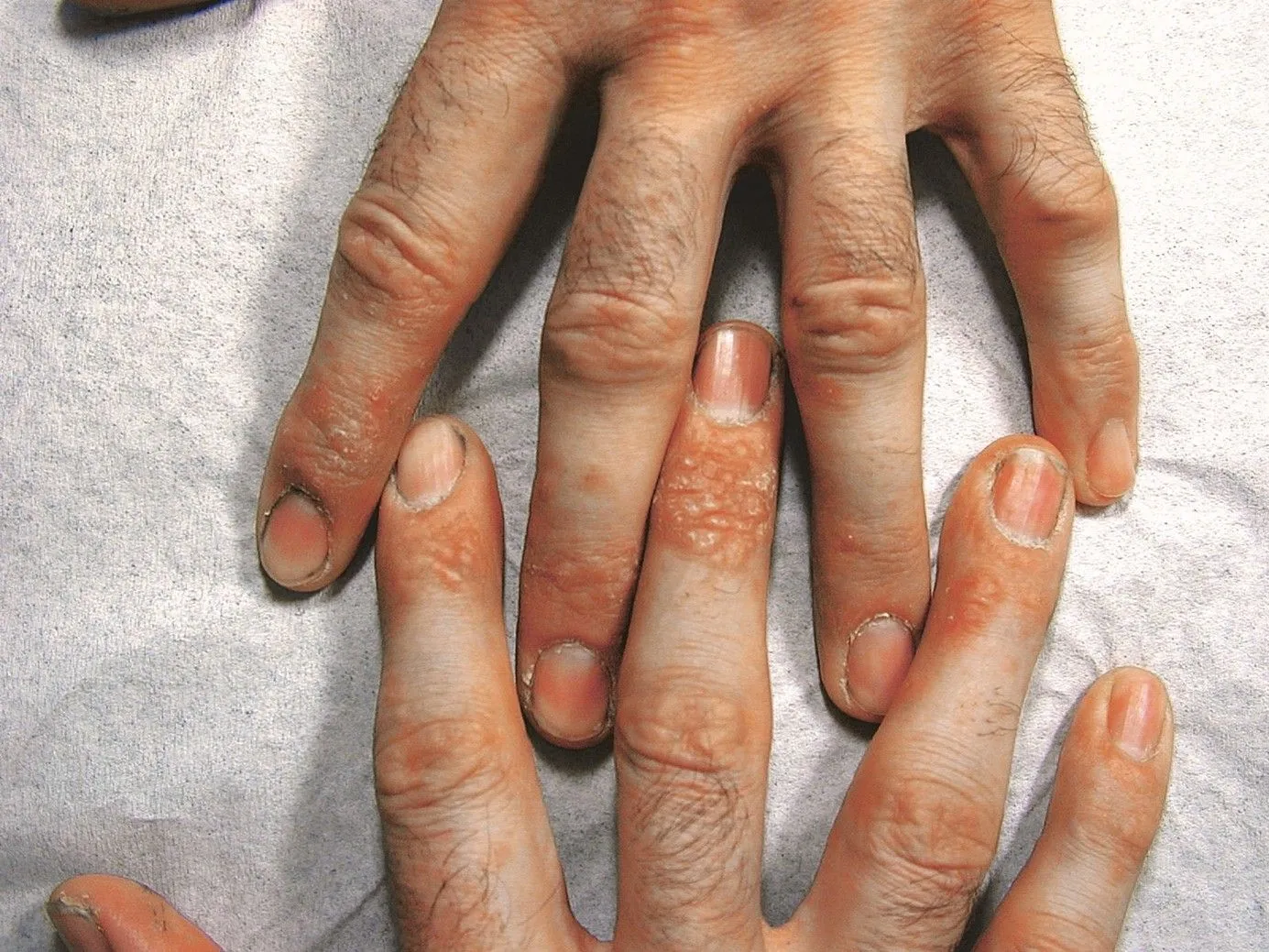
Introduction
It develops after repeated exposure to irritant and/or allergenic substances in the workplace.
It is a common condition that can have a significant impact on daily function and on working life.
Symptoms
- Skin redness
- Itching
- Blisters or oozing
- Cracks and fissures
- Thickening of the skin if it becomes chronic
Causes
- Hairdressers
- Healthcare staff
- Construction
- Industry
- Cleaning
- Food trades
- Chemicals
- Detergents, solvents
- Gloves, metals
- Cosmetic or hair products
- Repeated exposure
- Prolonged moisture
- Minor skin trauma
- Fragile, sensitive skin
Diagnosis
- A detailed review of your work activities
- Clinical examination
- Patch testing to identify any contact allergy
- Distinguishing between an allergic, irritant or mixed mechanism
Treatments
- Avoiding or reducing exposure
- Topical treatments adapted to severity
- Skin protection (suitable gloves, barrier measures)
- Regular use of repairing skincare
Management
Precise identification of the agents responsible
Liaison with occupational health where necessary
Adapting your workstation or work practices
Regular dermatology and allergy follow-up