

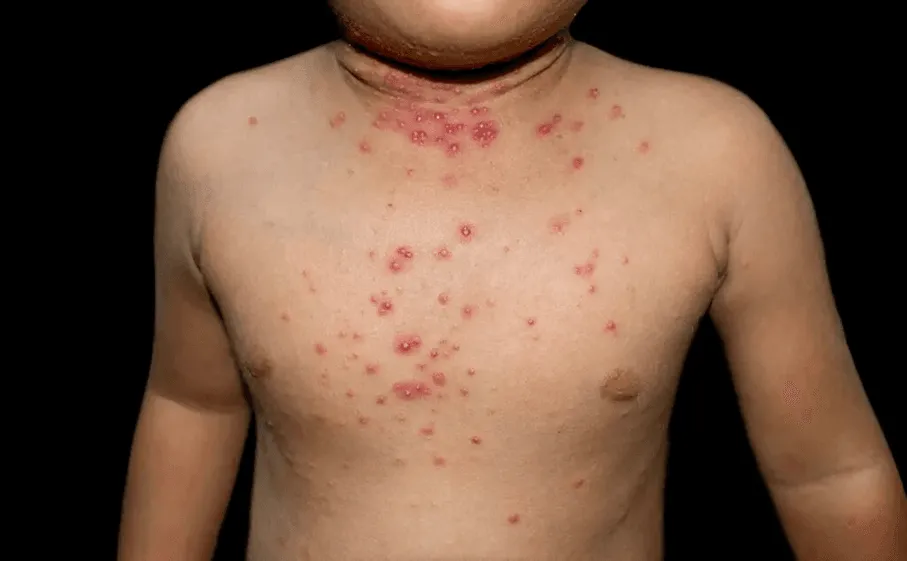
Introduction
The condition is characterised by small papules with a central dimple, single or multiple, which develop slowly and often clear up on their own.
Symptoms
- Smooth, firm, skin-coloured or pinkish papules
- Typical dimple in the centre
- Variable size (1 to 5 mm)
- Single or multiple lesions
- Common sites: trunk, limbs, skin folds, face (children), genital area (adults)
- Possible mild itching
- Temporary local inflammation as the lesions heal
- No pain in most cases
Causes
- Infection with the molluscum contagiosum virus (a poxvirus)
- Transmission through
- Direct skin contact Self-spreading through scratching Contaminated objects (towels, swimming pools)
- Direct skin contact
- Self-spreading through scratching
- Contaminated objects (towels, swimming pools)
- Contributing factors
- Childhood Atopic dermatitis Weakened immune system
- Childhood
- Atopic eczema (atopic dermatitis)
- Weakened immune system
Diagnosis
- Typical clinical diagnosis
- Dermoscopy useful if in doubt
- No further tests needed routinely
- Biopsy only in exceptional, atypical cases
- Differential diagnosis with: Warts Keratoses Folliculitis
- Warts
- Keratoses
- Folliculitis
Treatments
- Curettage
- Cryotherapy with liquid nitrogen
- Keratolytic or caustic solutions (depending on age)
- Avoiding scratching
- Appropriate skin hygiene
- Treatment of associated skin conditions (eczema)
- Precision medical cryotherapy
- Dermatological curettage under direct vision
Management
Individualised dermatological care
Reassuring information on its benign nature
Simple monitoring in children
Treatment recommended for numerous, bothersome or persistent lesions
Advice to limit self-spreading