

Introduction
They make it possible to identify precisely the substance or substances responsible for a delayed allergic reaction, which usually appears 24 to 72 hours after contact.
Symptoms
- Recurrent or persistent eczema
- Chronic contact dermatitis
- Occupational eczema
- Suspected allergy to metals, cosmetics or chemicals
- Lesions mainly on the hands, face or eyelids
Causes
- Metals (nickel, chromium, cobalt)
- Cosmetics (fragrances, preservatives)
- Household or industrial products
- Topical medicines
- Occupational substances
- Failure of the usual treatments
- Repeated exposure
- Impact on work or daily functioning
Diagnosis
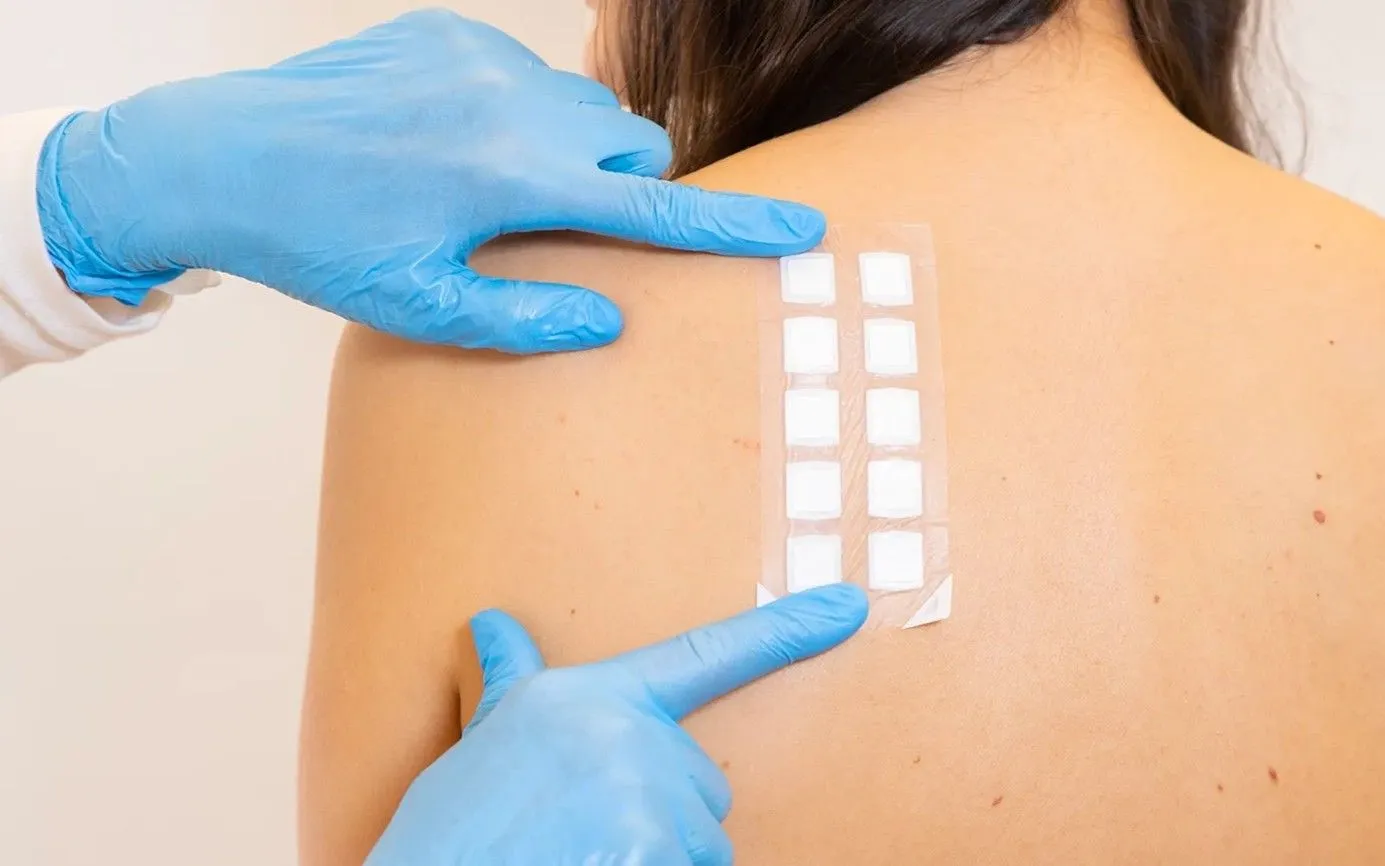
- Application of patch tests to the back
- Small amounts of standardised allergens are applied
- One or more delayed readings (48 h, sometimes 72–96 h)
- A contact allergy
- Irritant dermatitis
- Another dermatological cause
Treatments
- To adjust dermatological treatment
- To introduce targeted avoidance
- To prevent recurrences
- To bring a lasting improvement in the condition of the skin
- an essential diagnostic tool
Management
Appropriate choice of test series
Medical interpretation of the results
Clear explanation of the allergens identified
Precise advice on avoidance and substitutes
Dermatological and allergy follow-up