

Introduction
Cutaneous anthrax is a rare but potentially serious bacterial infection caused by Bacillus anthracis. It is the most common form of anthrax in humans. Infection usually occurs through direct contact of broken skin with infected animals or contaminated animal products. With early diagnosis and treatment, the outcome is favourable in most cases.
Symptoms
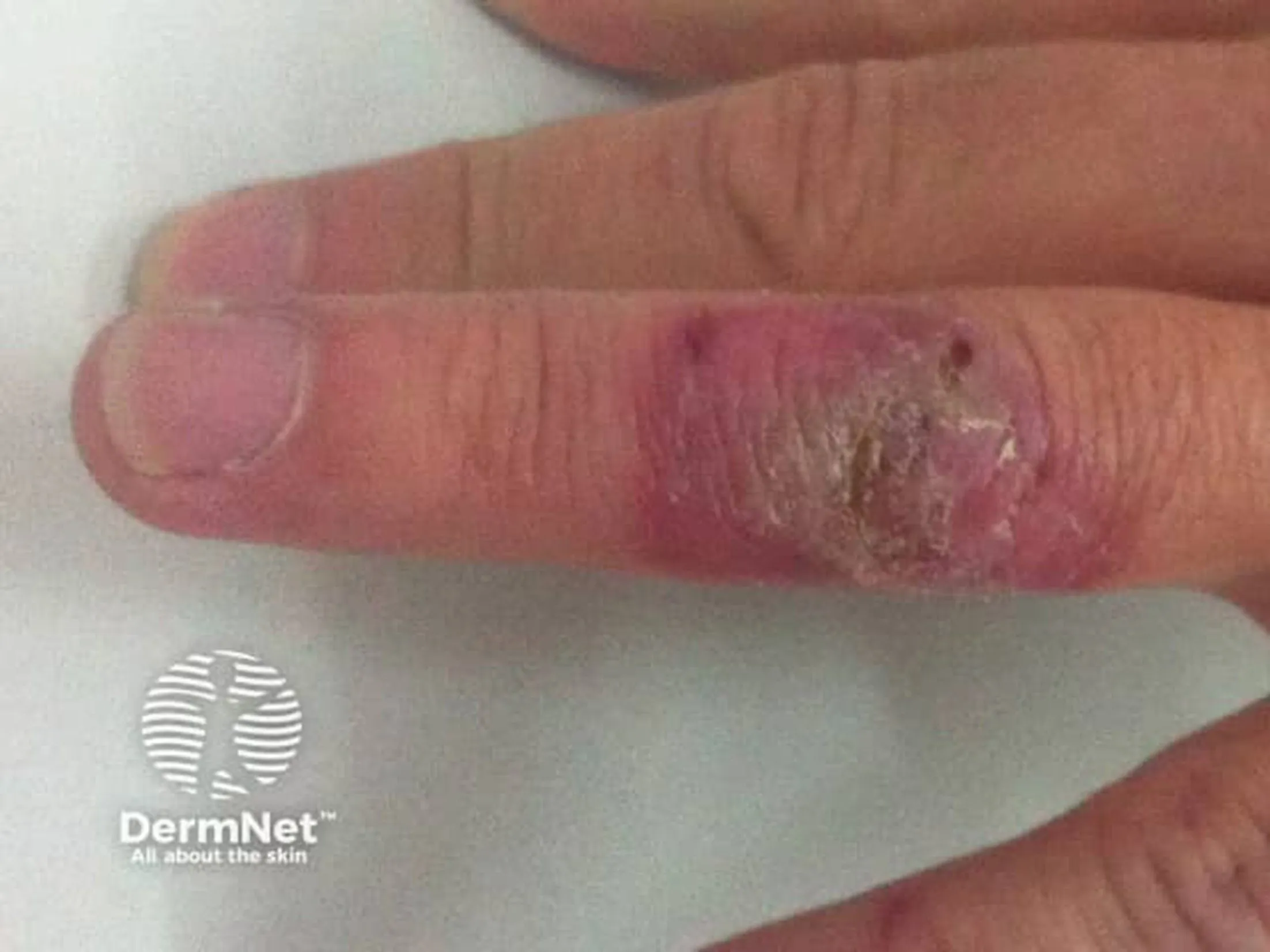
- Painless papule at the initial point of entry
- Rapid progression to a blister or pustule
- Formation of a characteristic central black eschar (scab)
- Marked swelling (oedema) around the lesion
- No pain despite its alarming appearance
- Possible swollen regional lymph nodes
- Mild or no fever in simple forms
- Possible general symptoms in complicated forms
Causes
- Infection with Bacillus anthracis
- Bacteria entering through a tiny break in the skin
- Contact with
- infected animals contaminated hides, wool or meat
- infected animals
- contaminated hides, wool or meat
- Higher risk in certain occupations (livestock farming, abattoirs, veterinary work)
- Usually short incubation period
- 1 to 7 days
Diagnosis
- Clinical diagnosis suggested by the typical black eschar
- Occupational context or at-risk exposure
- Microbiological confirmation: local swab blood cultures if general symptoms are present
- local swab
- blood cultures if general symptoms are present
- PCR or specialised cultures in hospital
- Mandatory notification in accordance with current legislation
Treatments
- Ciprofloxacin
- Doxycycline
- Amoxicillin (depending on antibiotic sensitivity testing and context)
- Close clinical monitoring
- Hospital admission for extensive forms or general symptoms
- No surgical drainage of the active lesion
- No instrument-based dermatological technology
- Specialist, coordinated medical care
Management
Urgent medical care
Coordination with infectious diseases services
Appropriate isolation in line with public health recommendations
Notification and epidemiological tracing
Dermatological follow-up until fully healed