

Introduction
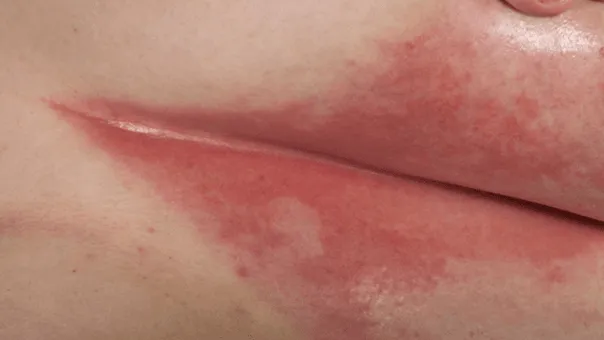
Bacterial intertrigo is a skin infection of the body folds, encouraged by moisture, friction and dampness. It occurs mainly where skin rubs against skin (groin, between the buttocks, under the breasts, armpits). Bacteria, most often streptococci or staphylococci, multiply on weakened skin, causing local inflammation that can be painful.
Symptoms
- Bright, well-defined redness in the skin folds
- Local burning or pain
- Soggy (macerated) skin
- Possible oozing
- Cracks or superficial erosions
- Sometimes an unpleasant smell
- Variable itching
- Possible spread to neighbouring areas
Causes
- Bacterial overgrowth on macerated skin
- Contributing factors
- excessive sweating repeated friction obesity diabetes wearing tight or synthetic clothing
- excessive sweating
- repeated friction
- obesity
- diabetes
- wearing tight or synthetic clothing
- Possible secondary infection of an initially non-infectious intertrigo
Diagnosis
- Diagnosis is essentially clinical
- Examination of the affected folds
- Bacterial swab in the event of: treatment failure recurrent forms diagnostic doubt (bacterial vs fungal)
- treatment failure
- recurrent forms
- diagnostic doubt (bacterial vs fungal)
- Differential diagnosis with: fungal intertrigo inverse psoriasis contact dermatitis
- fungal intertrigo
- inverse psoriasis
- contact dermatitis
Treatments
- Mild antiseptics
- Appropriate topical antibiotics
- Protective barrier creams after the acute phase
- Oral antibiotics for extensive or resistant forms
- Careful drying of skin folds
- Reducing friction
- Loose cotton clothing
- Weight loss if needed
- No instrument-based dermatological technology
- Conventional medical care
Management
Personalised dermatological care
Identifying and correcting contributing factors
Preventing recurrences with appropriate hygiene measures
Follow-up for chronic or recurrent forms