

Introduction
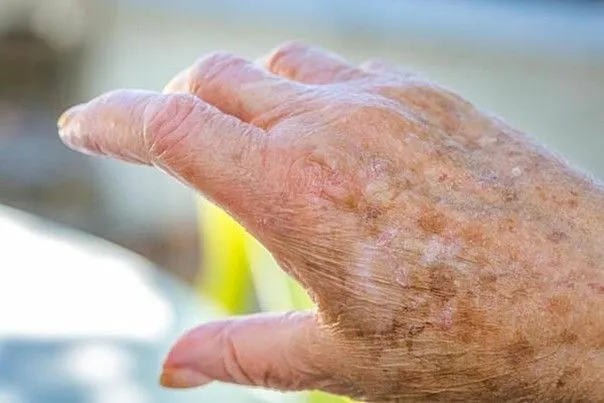
Solar lentigines, commonly known as age spots, brown spots or sun spots, are benign pigmentation disorders caused by chronic exposure to ultraviolet radiation. They usually appear with age on sun-exposed areas and are a sign of sun-induced skin ageing.
Symptoms
- Well-defined brown or dark brown spots
- Variable size, from a few millimetres to several centimetres
- Flat surface, not raised
- Common sites: face, hands, décolletage, shoulders, forearms
- No pain, itching or inflammation
- Gradual increase in number over time
Causes
- Chronic, repeated sun exposure
- Skin ageing (photoageing)
- Fair skin types at greater risk
- History of intense sun exposure
- No or inadequate sun protection
- Genetic predisposition
Diagnosis
- Clinical skin examination
- Assessment of the shape and colour of the lesions
- Dermoscopy if the diagnosis is uncertain
- Ruling out other pigmented lesions (naevi, keratoses, suspicious lesions)
Treatments
- Medical depigmenting creams
- Topical retinoids
- Anti-pigmentation dermocosmetic skincare
- Medical pigment lasers (the reference treatment)
- Medical IPL (intense pulsed light)
- Superficial or medium-depth chemical peels
- Targeted cryotherapy (in some cases)
- Medical LED as an add-on
Management
An accurate assessment of the type of pigmented spot
The choice of the most suitable technology
Strict daily sun protection
Dermatological follow-up to prevent recurrence