

Introduction
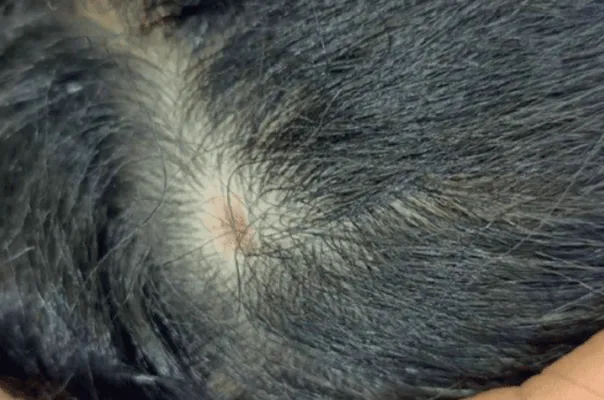
Scalp ringworm, or tinea capitis, is a contagious fungal infection that mainly affects children. It is caused by dermatophytes (most often Microsporum or Trichophyton) and affects the hair and scalp. Without treatment, it can lead to persistent hair loss, which may be scarring in inflammatory forms.
Symptoms
- Scaly patches on the scalp
- Localised patches of hair loss
- Short broken hairs (‘stubble-like’ appearance)
- Variable itching
- Local redness
- Possible painful inflammatory form (kerion)
- Oozing or crusts in severe forms
- Possible swollen lymph nodes in the neck
Causes
- Infection with dermatophytes (Microsporum canis, Trichophyton tonsurans, etc.)
- Transmission
- Direct contact between children Contact with animals (cats, dogs) Contaminated objects (brushes, hats, pillows)
- Direct contact between children
- Contact with animals (cats, dogs)
- Contaminated objects (brushes, hats, pillows)
- Encouraged by close contact and group settings
Diagnosis
- Suggestive clinical picture
- Mycological testing is essential: Hair sampling Direct microscopy and culture
- Hair sampling
- Direct microscopy and culture
- Wood’s lamp useful for certain species (Microsporum)
- Differential diagnosis with: Alopecia areata Scalp psoriasis Seborrhoeic dermatitis
- Alopecia areata
- Scalp psoriasis
- Seborrhoeic dermatitis
Treatments
- Oral antifungals (griseofulvin, terbinafine depending on the species)
- Duration
- 4 to 8 weeks depending on the form and the organism
- Antifungal shampoos to reduce contagiousness
- Screening and treatment of contacts
- Disinfection of linen, hats and brushes
- Temporary exclusion from school according to recommendations
- No instrument-based technology
- Specialist medical dermatological care
- systemic treatment is mandatory
Management
Dermatological care is essential
Coordination with the family and school
Clinical and mycological follow-up until cured
Prevention of inflammatory and scarring forms