

Introduction
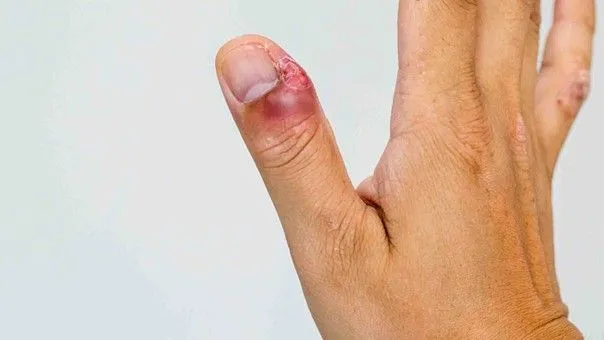
A whitlow is an acute bacterial infection of the finger, most often affecting the tissues around the nail or the fingertip pulp. It is usually caused by Staphylococcus aureus and develops after a minor break in the skin (a prick, a manicure, nail biting). Without appropriate treatment, it can progress to a painful abscess requiring a medical procedure.
Symptoms
- Intense, throbbing local pain
- Redness and warmth of the finger
- Increasing swelling
- Marked tenderness to touch
- Build-up of pus in advanced forms
- Difficulty moving the finger
- Fever: rare but possible
- Rapid worsening without treatment
Causes
- Bacterial infection, mainly with Staphylococcus aureus
- Entry point through the skin
- small cuts aggressive manicure nail biting foreign body
- small cuts
- aggressive manicure
- nail biting
- foreign body
- Contributing factors
- diabetes weakened immune system repeated exposure to moisture at work
- diabetes
- weakened immune system
- repeated exposure to moisture at work
Diagnosis
- Clinical diagnosis based on the inflamed, painful appearance
- Assessment of the stage: inflammatory collected (abscess)
- inflammatory
- collected (abscess)
- No further tests needed in simple forms
- Bacterial swab in complicated forms
- Differential diagnosis with: herpetic whitlow trauma septic arthritis
- herpetic whitlow
- trauma
- septic arthritis
Treatments
- Oral antibiotics at early stages
- Painkillers if needed
- Antiseptics
- Antiseptic soaks
- Surgical drainage by a doctor once an abscess has formed
- Resting the finger as far as possible
- Avoid any squeezing or picking
- Thorough hand hygiene
- Controlled dermatological or surgical drainage procedure
- No specific laser or instrument-based technology
Management
Prompt dermatological or surgical treatment
Assessment of the stage to tailor treatment
Follow-up until complete recovery
Prevention of recurrence by correcting risky habits