

Introduction
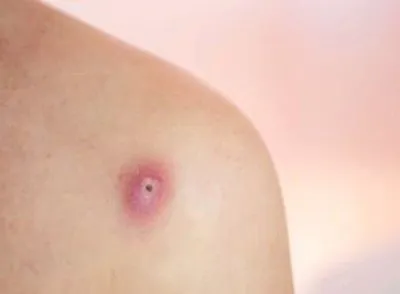
A boil (furuncle) is a deep bacterial infection of a hair follicle, most often caused by Staphylococcus aureus. It is an advanced form of folliculitis in which a painful skin abscess forms. Boils may be single or multiple (furunculosis) and need appropriate treatment to avoid local complications or spread of the infection.
Symptoms
- Red, hot, painful lump
- Gradual increase in size
- Yellowish or whitish centre indicating pus formation
- Feeling of tight skin
- Throbbing pain
- Discharge of pus once the boil has come to a head
- Possible fever in extensive forms
- Occasional tiredness or feeling generally unwell
Causes
- Infection with Staphylococcus aureus
- Bacteria entering through the hair follicle
- Contributing factors
- repeated friction sweating and moist skin shaving diabetes weakened immune system
- repeated friction
- sweating and moist skin
- shaving
- diabetes
- weakened immune system
- Possible self-spread from touching or squeezing the lesions
Diagnosis
- Diagnosis is essentially clinical
- No further tests needed in simple forms
- A bacterial swab is recommended in the case of: recurrences multiple boils treatment failure
- recurrences
- multiple boils
- treatment failure
- Differential diagnosis with: infected cyst hidradenitis suppurativa skin abscess of another origin
- infected cyst
- hidradenitis suppurativa
- skin abscess of another origin
Treatments
- Skin antiseptics
- Warm compresses to encourage spontaneous drainage
- Oral antibiotics in the case of
- severe forms fever high-risk patients
- severe forms
- fever
- higher-risk patients
- Medical incision and drainage under strict conditions when necessary
- Do not lance the boil yourself
- Thorough hand hygiene
- Avoid local friction
- Controlled dermatological drainage procedures
- No specific laser or instrument-based technology
Management
Dermatological care recommended
Looking for contributing factors and nasal carriage
Preventive treatment for recurrent furunculosis
Follow-up until complete recovery