

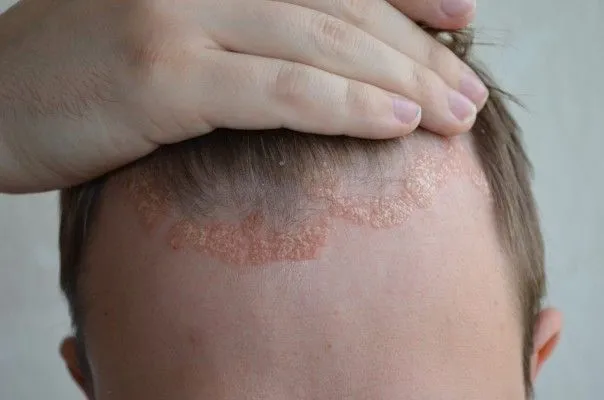
Introduction
Seborrhoeic dermatitis of the scalp is a common chronic inflammatory condition that causes dandruff, scaling and itching. It comes and goes in flare-ups, often brought on by stress, tiredness or certain times of year. Although benign, it can be bothersome both cosmetically and in everyday life, and warrants appropriate dermatological care.
Symptoms
- White or yellowish dandruff
- Greasy scales stuck to the hair
- Redness of the scalp
- Itching, sometimes intense
- Irritated or sensitive scalp
- May spread to other oily (seborrhoeic) areas: eyebrows sides of the nose around the ears
- eyebrows
- sides of the nose
- around the ears
- Possible reactive hair shedding (non-scarring)
Causes
- Skin hypersensitivity to Malassezia yeasts
- Excessive or unbalanced sebum production
- Genetic predisposition
- Stress and tiredness
- Climatic factors (cold, humidity)
- Certain general medical conditions or treatments
Diagnosis
- The diagnosis is essentially clinical: Dermatological examination of the scalp Assessment of the scales and the skin Ruling out other diagnoses: scalp psoriasis tinea capitis (scalp ringworm) contact dermatitis
- Dermatological examination of the scalp
- Assessment of the scales and the skin
- Ruling out other diagnoses: scalp psoriasis tinea capitis (scalp ringworm) contact dermatitis
- scalp psoriasis
- tinea capitis (scalp ringworm)
- contact dermatitis
- No further tests are needed in most cases
Treatments
- Specific antifungal shampoos
- Selected keratolytic shampoos
- Short course of topical corticosteroids during inflammatory phases
- Soothing, rebalancing scalp lotions
- Regular use of suitable shampoos
- Avoiding harsh or irritating products
- Personalised hair-washing routine
- Medical LED therapy (anti-inflammatory, soothing effect)
- Scalp care protocols for the chronic phase
- Combined approaches depending on severity
- control the inflammation
Management
Specialist dermatology consultation
Assessment of severity and triggers
A personalised treatment protocol
Follow-up to adjust treatment
Long-term maintenance strategy