

Introduction
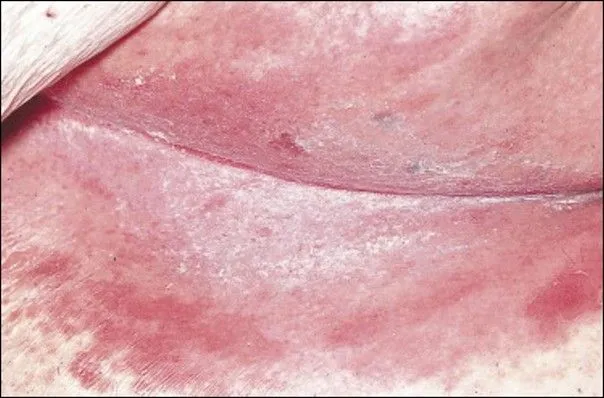
Candida infection of the skin folds, or candidal intertrigo, is a common form of cutaneous candidiasis that mainly affects skin folds. It is caused by the overgrowth of Candida albicans in a warm, moist environment where the skin becomes macerated. The infection is more likely in certain patients (diabetes, obesity, weakened immune system) and can keep coming back unless the contributing factors are corrected.
Symptoms
- Bright red, well-defined patches in the skin folds
- Shiny, macerated appearance
- Burning sensation or pain
- Itching is common
- Characteristic satellite lesions around the edges
- Possible superficial cracks
- Weeping in acute forms
- Sometimes an unpleasant smell
Causes
- Overgrowth of Candida albicans
- Contributing factors
- Moisture and maceration Excessive sweating Obesity Diabetes Pregnancy Tight or synthetic clothing Prolonged antibiotic treatment Imbalance of the skin flora
- Moisture and maceration
- Excessive sweating
- Obesity
- Diabetes
- Pregnancy
- Tight or synthetic clothing
- Prolonged antibiotic treatment
- Imbalance of the skin flora
Diagnosis
- Diagnosis is essentially clinical
- Typical appearance with satellite lesions
- Mycological sample useful in the case of: Diagnostic doubt Atypical forms Treatment failure
- Diagnostic doubt
- Atypical forms
- Treatment failure
- Differential diagnosis with: Bacterial intertrigo Irritant intertrigo Inverse psoriasis
- Bacterial intertrigo
- Irritant intertrigo
- Inverse psoriasis
Treatments
- Topical antifungals (azoles, polyenes)
- Daily applications for 2 to 4 weeks
- Oral antifungals for widespread or recurrent forms
- Careful drying of skin folds
- Reducing moisture and friction
- Loose cotton clothing
- Weight loss if needed
- No specific device-based treatment
- Medical dermatological care
Management
Personalised dermatological care
Correction of contributing factors
Follow-up in case of frequent recurrences
Patient education on skin-fold hygiene