

Introduction
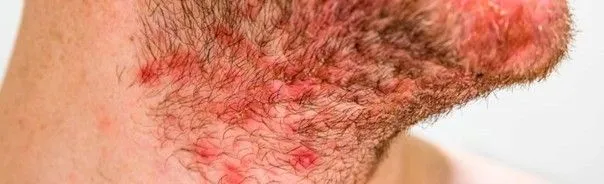
Sycosis barbae is a chronic bacterial infection of the hair follicles in the beard area, affecting only men. It is most often caused by Staphylococcus aureus and leads to recurrent inflammatory lesions, sometimes with pus, causing considerable discomfort and cosmetic concern. Appropriate treatment is needed to prevent it from becoming chronic.
Symptoms
- Follicular papules and pustules in the beard area
- Persistent inflammatory redness
- Local pain or burning sensation
- Possible yellowish crusts
- Variable itching
- Temporary local loss of beard hair
- Chronic course with recurrent flare-ups
- No general symptoms in most cases
Causes
- Bacterial infection with Staphylococcus aureus
- Contributing factors
- Repeated or harsh shaving Small skin injuries Nasal carriage of staphylococci Moist skin
- Repeated or harsh shaving
- Small skin injuries
- Nasal carriage of staphylococci
- Moist skin
- Predisposing conditions
- Diabetes Weakened immune system
- Diabetes
- Weakened immune system
Diagnosis
- Diagnosis is essentially clinical
- Bacterial swab recommended to identify the organism
- Testing for nasal carriage in case of recurrences
- Differential diagnosis with: Simple folliculitis Fungal infection of the beard (tinea barbae) Acne
- Simple folliculitis
- Fungal infection of the beard (tinea barbae)
- Acne
Treatments
- Skin antiseptics
- Appropriate topical antibiotics
- Prolonged oral antibiotics for chronic forms
- Treatment of nasal carriage if necessary
- Temporarily stopping shaving
- Using gentle, non-traumatic shaving techniques
- Careful hygiene of the area
- No instrument-based dermatological technology
- Specialist, long-term medical care
Management
Specialist dermatological care
Regular follow-up to prevent recurrences
Treatment adjusted according to progress
Personalised advice on hygiene and shaving