

Introduction
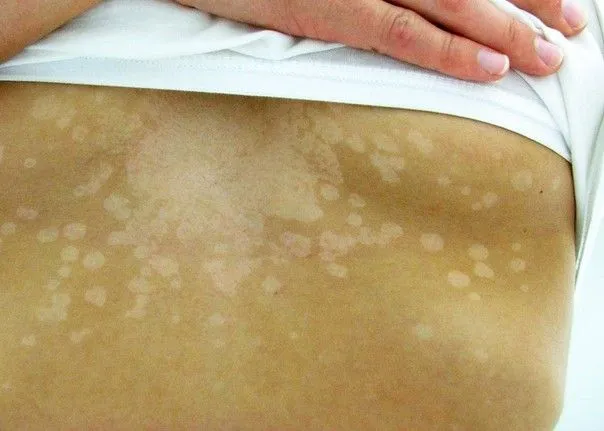
Pityriasis versicolor is a common superficial fungal infection caused by yeasts of the genus Malassezia, which are naturally present on the skin. Under certain conditions (heat, humidity, sweating), these yeasts overgrow and cause characteristic discoloured patches. The condition is benign but often recurs.
Symptoms
- Lighter, darker or pinkish patches
- Typical sites: trunk, back, shoulders, neck
- Fine scaling visible on scraping (the “scratch sign”)
- Mild or no itching
- Multiple patches, sometimes merging
- Contrast more visible after sun exposure
- May become chronic
- No pain
Causes
- Overgrowth of Malassezia yeasts
- Contributing factors
- Heat and humidity Excessive sweating Oily skin Tropical climate Weakened immune system
- Heat and humidity
- Excessive sweating
- Oily skin
- Tropical climate
- Weakened immune system
- Imbalance of the skin flora
- Sometimes runs in families
Diagnosis
- Diagnosis is mainly clinical
- Fine scaling revealed by scraping
- Wood’s lamp examination (yellow fluorescence) possible
- Mycological examination rarely needed
- Differential diagnosis with: Vitiligo Pityriasis rosea Post-inflammatory hypopigmentation
- Vitiligo
- Pityriasis rosea
- Post-inflammatory hypopigmentation
Treatments
- Topical antifungals (shampoos or lotions)
- Applied to all affected areas
- Oral antifungals for widespread or recurrent forms
- Reducing sweating
- Appropriate skin hygiene
- Preventive maintenance treatment possible
- No specific device-based treatment
- Medical dermatological care
Management
Appropriate dermatological care
Information on its benign but recurrent nature
Follow-up possible in summer
Preventive strategies put in place