

Introduction
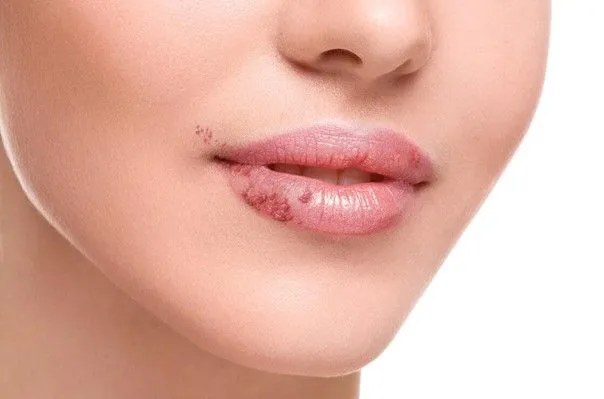
Herpes labialis, commonly known as a ‘cold sore’, is a common viral infection caused by herpes simplex virus type 1 (HSV-1). After a first infection, which often goes unnoticed, the virus remains dormant (latent) in the body and can reactivate repeatedly, causing characteristic lesions around the mouth.
Symptoms
- Local tingling, burning or tightness (prodromal phase)
- Clusters of blisters on a red base on the lips or around the mouth
- Blisters break open and crust over
- Pain or cosmetic discomfort
- Possible local swelling
- Heals on its own in 7 to 10 days
- Recurrences vary from person to person
Causes
- Infection with herpes simplex virus type 1 (HSV-1)
- Transmission through direct contact (saliva, kissing, contaminated objects)
- Reactivation encouraged by
- Stress Tiredness Fever Sun exposure Lowered immunity
- Stress
- Tiredness
- Fever
- Sun exposure
- Lowered immunity
Diagnosis
- Clinical diagnosis in most cases
- No further tests needed routinely
- Viral swab (PCR) reserved for atypical or severe forms
- Differential diagnosis with: Impetigo Contact dermatitis Mouth ulcers around the lips
- Impetigo
- Contact dermatitis
- Mouth ulcers around the lips
Treatments
- Aciclovir creams (mild forms)
- Oral valaciclovir or aciclovir (severe or recurrent forms)
- Apply early, at the first signs
- Sun protection for the lips
- Avoid touching or scratching the lesions
- Low-level laser therapy (LLLT) in some specialist treatment settings
- Photobiomodulation to speed up healing and reduce pain
Management
Dermatological care for frequent recurrences or severe forms
Patient education on recognising early signs
Prevention of recurrences through sun protection
Support if there is a cosmetic or professional impact