

Introduction
Androgenetic alopecia is the most common cause of hair loss in both men and women. It involves the gradual miniaturisation of hair follicles under the influence of hormonal and genetic factors. The condition progresses slowly but can have a significant cosmetic and psychological impact, which warrants specialist dermatological care.
Symptoms
- Gradual reduction in hair density
- Finer, shorter, more fragile hair
- In men: Receding temples Thinning at the crown
- Receding temples
- Thinning at the crown
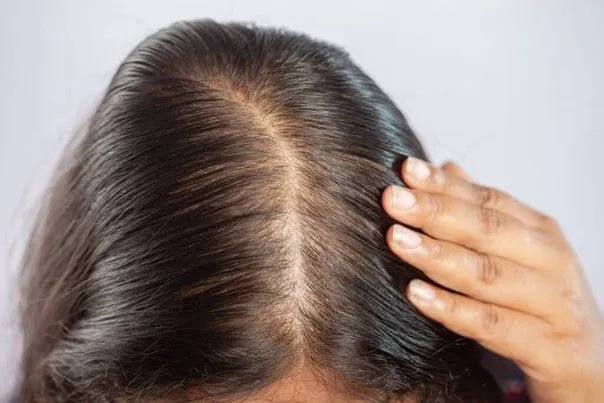
- In women: Gradual widening of the central parting Diffuse thinning on the top of the head
- Gradual widening of the central parting
- Diffuse thinning on the top of the head
- No inflammation or pain
- Slow progression over several years
Causes
- Familial genetic predisposition
- Increased sensitivity of hair follicles to dihydrotestosterone (DHT)
- Shortening of the hair growth cycle
- Gradual miniaturisation of the follicle
- Possible aggravating factors
- Chronic stress Associated deficiencies Hormonal disorders in women
- Chronic stress
- Associated deficiencies
- Hormonal disorders in women
Diagnosis
- Diagnosis is essentially clinical
- Analysis of the pattern of hair loss
- Dermoscopy of the scalp: Variation in hair shaft diameter Follicular miniaturisation
- Variation in hair shaft diameter
- Follicular miniaturisation
- Blood tests sometimes offered to women (deficiencies, hormonal disorders)
- Differential diagnosis with: Telogen effluvium Alopecia areata Scarring alopecias
- Telogen effluvium
- Alopecia areata
- Scarring alopecias
Treatments
- Topical treatments that promote hair growth
- Systemic treatments depending on sex and medical indication
- Stimulating scalp injections
- Follicle stimulation techniques
- Medical devices that improve microcirculation
- Correction of aggravating factors
- Regular monitoring of progress
- Early treatment recommended
- slow down hair loss
- stabilise progression
- stimulate regrowth
Management
Personalised assessment according to age, sex and stage
Setting realistic goals
Long-term treatment with dermatological follow-up
Treatment adjusted according to response