

Introduction
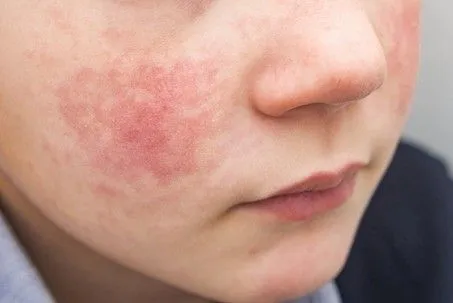
Erythema infectiosum is a benign viral infection caused by parvovirus B19. It mainly affects children but can also occur in adults. It typically presents as a characteristic skin rash, often preceded by mild general symptoms. In most cases, it clears up on its own.
Symptoms
- Bright red rash on the cheeks, giving a ‘slapped cheek’ appearance
- Maculopapular rash on the trunk and limbs
- Sometimes a lacy, net-like pattern on the skin
- Mild or no fever
- Fatigue, headache
- Joint pain (especially in adults)
- Possible mild itching
- Mild respiratory symptoms in the early phase
Causes
- Infection with parvovirus B19
- Respiratory transmission (droplets)
- Possible transmission through close contact or at school
- Incubation period
- about 1 to 3 weeks
- Most contagious before the rash appears
Diagnosis
- Diagnosis is mainly clinical
- Often occurs in outbreaks (schools, communal settings)
- Viral serology if the diagnosis is uncertain
- Blood PCR reserved for particular situations: pregnancy weakened immune system unexplained anaemia
- pregnancy
- weakened immune system
- unexplained anaemia
Treatments
- Fever-reducing medicines if there is a fever
- Painkillers for joint pain
- Antihistamines if itchy
- Rest
- Adequate fluid intake
- No need to stay off school once the rash has appeared
- No specific dermatological technology indicated
- Simple clinical follow-up in uncomplicated forms
Management
Dermatological or paediatric care depending on age
Particular monitoring for: pregnant women patients with a weakened immune system patients with chronic anaemia
pregnant women
patients with a weakened immune system
patients with chronic anaemia
Reassuring information for the patient and those around them